How Paint Matching Works After a Car Repair
A repaired bumper or door can be structurally sound and still feel unfinished if its color looks even slightly different in the sun. That is why understanding how paint matching works after repair can make the collision-repair process less uncertain. A quality refinish is not simply a matter of finding a paint code and spraying the damaged panel. It is a controlled process of identifying the vehicle’s original color, accounting for real-world changes in that finish, and blending new paint so the repair belongs with the rest of the vehicle.
For drivers in South Florida, this attention matters. Bright sun, heat, rain, salt air, and daily driving can change how a finish appears over time. The goal is a repair that looks right not only in a paint booth, but also in a driveway, parking lot, or on the road.
Why the Paint Code Is Only the Starting Point
Most vehicles have a factory paint code listed on an identification label, often located in a door jamb, under the hood, or in another manufacturer-designated location. That code gives a repair facility the formula for the color originally applied at the factory.
It does not guarantee that one mix will perfectly match every vehicle carrying that code. Manufacturers may produce several acceptable variants of the same factory color. A white, silver, gray, red, or pearl finish can have different shades, metallic particle sizes, or tones depending on the assembly plant, production date, and paint batch.
Then there is the vehicle itself. Even when a car has been well maintained, its existing finish has lived through years of sunlight, washing, road debris, and weather. Clear coat can age gradually, and the color underneath may look warmer, lighter, darker, or less vivid than it did when new. A paint technician matches the vehicle in front of them, not just the color listed in a database.
How Paint Matching Works After Repair
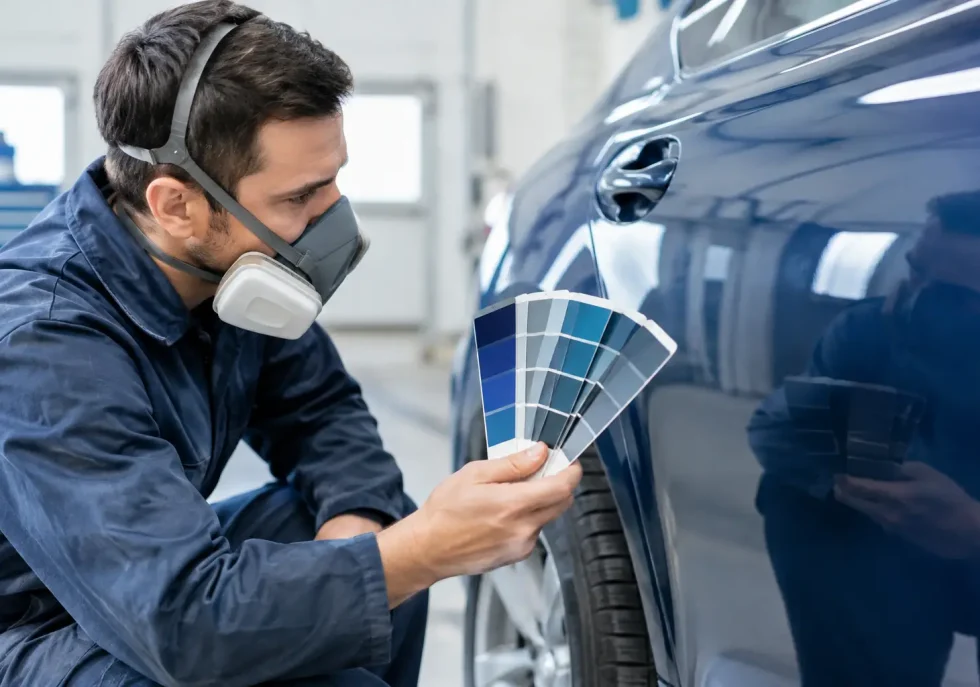
After the damaged panel has been repaired or replaced and properly prepared, the refinishing process begins with careful color evaluation. The technician confirms the manufacturer paint code, reviews available color variants, and visually compares them with the vehicle under appropriate lighting.
Modern collision centers also use color-matching tools that can read the surface and help identify the closest available formula. These tools improve accuracy, especially with complex metallic, pearl, and tri-coat finishes. Still, technology supports the technician’s judgment rather than replacing it. Paint can look different under shop lighting, direct sun, shade, and fluorescent lighting, so experience remains essential.
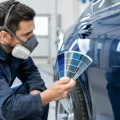
The technician typically mixes a small test sample and sprays a spray-out card. This card shows how the color will look once it has been applied, dried, and cleared. It is compared with the adjacent panels before the final refinish work begins. If the match is not right, the formula can be adjusted before paint is applied to the vehicle.
This step is particularly valuable for colors that are difficult to reproduce. Metallic and pearl paints contain particles that reflect light at different angles. A finish may look correct when viewed straight on but appear noticeably different when seen from the side. The way paint is sprayed, including gun setup, air pressure, overlap, and application technique, affects the final appearance as much as the formula itself.
Why Adjacent Panels May Need Blending
Customers are sometimes surprised to hear that a shop may recommend blending paint into a panel next to the damaged area. Blending does not mean the adjacent panel is damaged. It means the technician gradually fades the new color into that panel so the eye cannot detect a hard color transition.
For example, if a front fender is repaired, the paint may be blended into the front door or hood, depending on the vehicle’s panel layout and color. The repaired fender receives the full color application. The neighboring panel receives a controlled transition area, followed by clear coat applied according to the proper refinishing process.
Blending is often the difference between a color that is technically close and a finish that looks natural as you walk around the vehicle. It is especially common with silvers, grays, reds, pearls, and colors with visible metallic flake. On some solid colors or very minor repairs, blending may not be necessary. The right decision depends on the paint color, panel location, vehicle age, extent of damage, and condition of the surrounding finish.
Surface Preparation Affects the Final Color
Paint matching is not only about the topcoat. The surface underneath has to be repaired, leveled, primed, sealed, and prepared correctly. Small imperfections in the repair area can become more visible once color and clear coat are applied, particularly under bright Florida sunlight.
The undercoat color also matters. Many modern paint systems specify a particular sealer shade beneath the basecoat. Using the correct ground coat helps the final color develop as intended and improves coverage. This is one reason a proper refinish takes more than a quick touch-up.
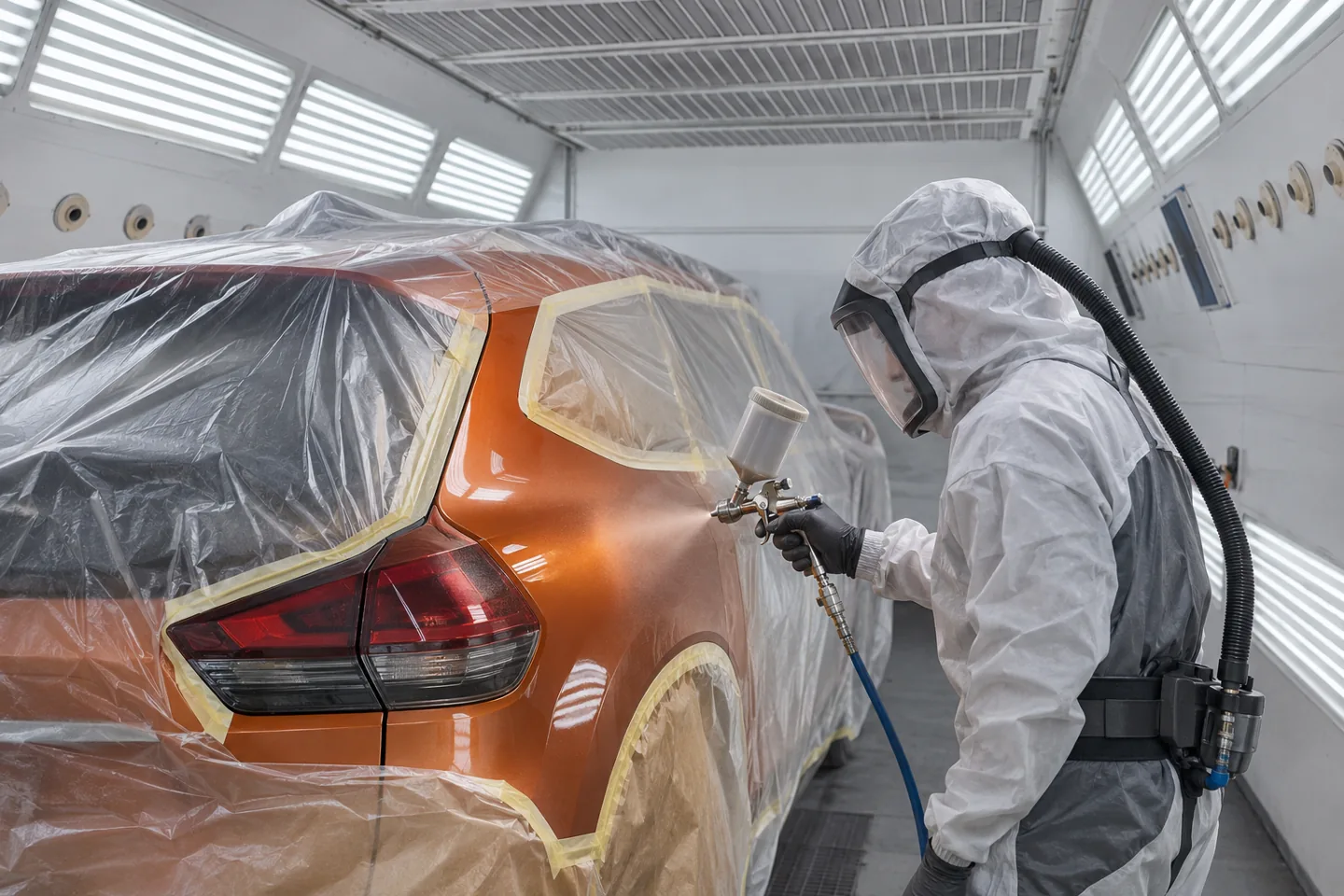
A professional facility controls dust, airflow, temperature, and drying conditions in a dedicated paint booth. Those conditions support a cleaner finish and more consistent application. The repair process also includes masking and protecting nearby areas so overspray and contamination do not affect the rest of the vehicle.
Clear Coat Creates More Than Shine
Once the color coat is applied, the clear coat gives the surface its gloss, depth, and protection. It also helps the repaired area visually match the surrounding panels. A clear coat that is too dull, too glossy, or improperly applied can make a repair noticeable even if the color is accurate.
After curing, the refinished panel may be inspected, carefully polished where appropriate, and checked from several angles. Quality control should include looking at the repair under different light conditions, because a finish that appears consistent inside may show a difference outdoors.
It is normal for a newly refinished area to look clean and glossy compared with weathered panels elsewhere on the vehicle. That does not necessarily mean the color is wrong. Over time, regular washing and normal exposure help the vehicle’s overall appearance settle into a more uniform look. Your repair team can also advise you on when it is appropriate to wash, wax, or apply paint protection after refinishing.
What Can Affect a Perfect Visual Match?
A reputable repair center works to achieve the closest possible match, but honest expectations matter. Some situations are more challenging than others. Older paint, prior bodywork, faded clear coat, custom colors, and factory tri-coat finishes may require more testing and blending. Vehicles with paint protection film, vinyl wraps, or aftermarket coatings can add another layer of consideration as well.
Paint damage may also reveal unrelated fading on another part of the vehicle. If only one damaged panel is being repaired, the shop’s responsibility is to restore that repair area correctly, not to reverse years of sun exposure across every panel. Blending is the professional method used to manage that transition when it is needed.
Insurance-approved repair plans can also affect the scope of refinishing. If blending adjacent panels is necessary for a proper appearance, the repair facility can document why that operation supports the completed repair and work through the claim process. Clear communication helps prevent surprises before the vehicle is ready for pickup.
Choosing a Shop That Takes Refinishing Seriously
Paint work should be considered part of the repair, not an afterthought. Ask whether the shop uses a computerized color retrieval process, spray-out cards, blending when appropriate, and a controlled paint booth. It is also reasonable to ask what paint system the facility uses and how it inspects the finished vehicle before delivery.
At Auto Collision Specialists, refinishing is handled as part of the complete restoration process, with trained technicians, dedicated paint booths, and PPG Envirobase Waterborne Paint. That approach supports a finish designed to complement the repaired vehicle while keeping the process clear for the owner.
After a collision, you should not have to choose between proper structural repair and a vehicle that looks like itself again. A careful color-match process gives both the repair and the final appearance the attention they deserve.