Can Car Frame Damage Be Repaired After a Crash?
A hard curb strike, side impact, or front-end collision can leave drivers asking, can car frame damage be repaired? In many cases, yes. Modern collision repair equipment can measure and correct structural damage with remarkable accuracy. The key is determining the extent of the damage, following manufacturer repair procedures, and confirming the vehicle can be returned to safe operating condition.
Frame damage is not something to judge by appearance alone. A bumper may look relatively intact while the structure behind it has shifted. Conversely, visible body damage can be extensive without affecting the vehicle’s main structure. A professional inspection provides the answer and gives you a clear path forward.
What “frame damage” means on a modern vehicle
Most passenger vehicles on the road today use unibody construction. Instead of having a separate, heavy frame under the body, the structural rails, floor, roof pillars, and other components work together as one engineered safety structure. Trucks and some SUVs may use a body-on-frame design, where the body mounts to a separate frame.
In either design, the structure is responsible for much more than holding panels in place. It supports suspension mounting points, helps keep the wheels aligned, provides mounting locations for safety systems, and manages crash energy in a controlled way. Even a small change in a structural rail or mounting point can affect how the vehicle drives and how replacement parts fit.
That is why a vehicle should not be considered repaired simply because the hood closes, the paint looks good, or the steering wheel seems straight during a short drive.
Can car frame damage be repaired safely?
Yes, car frame damage can often be repaired safely when the damage is within repairable limits and the work is completed by trained technicians using proper measuring and straightening equipment. The word often matters. Not every bent, crushed, torn, or corroded structural section should be straightened.
A qualified collision center starts by measuring the vehicle against manufacturer dimensions. This identifies whether rails, suspension points, pillars, or other structural locations are out of specification. The repair plan may call for controlled pulling and straightening, replacement of a damaged section, or replacement of a complete component.
Safety depends on precision, not force. Pulling a structural area back into place without first measuring it, or without following the manufacturer’s repair instructions, can leave hidden weaknesses or incorrect geometry. Proper repair work considers the type of metal, the location of the damage, factory seams, corrosion protection, and the vehicle’s safety systems.
When straightening is an appropriate repair
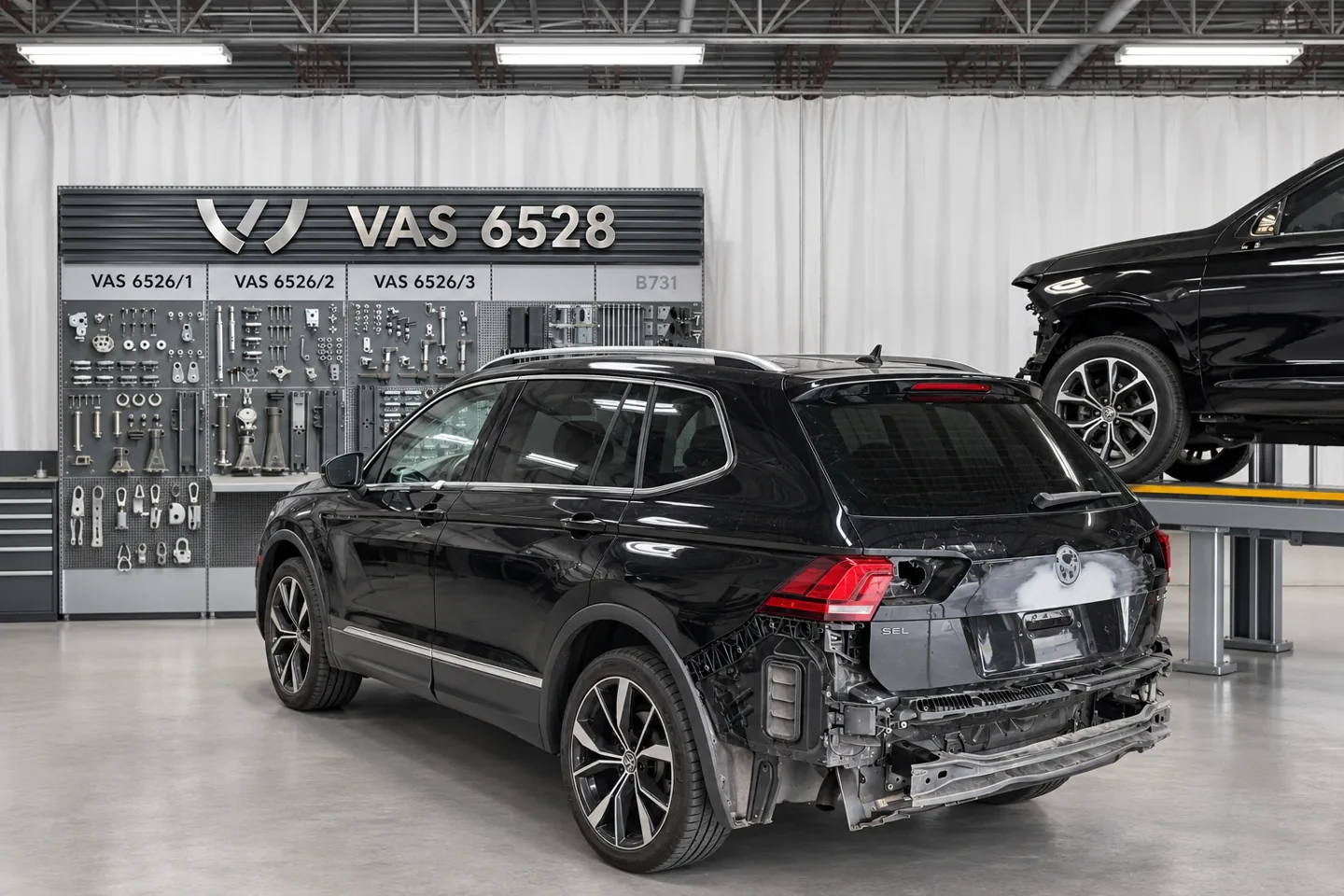
Straightening may be appropriate when a structural component is bent or shifted but has not been damaged beyond the manufacturer’s allowable repair limits. Technicians use dedicated anchoring and measuring systems to secure the vehicle and apply controlled pulls in the correct direction.
This is not the same as pulling on a vehicle until body gaps look better. The objective is to restore documented structural dimensions. During and after the pull, technicians remeasure key points to confirm the structure is returning to specification.
Straightening can be a practical and safe solution for certain front rail, rear rail, apron, or floor-area damage. The exact decision depends on the vehicle model, severity of impact, metal condition, and manufacturer procedures.
When replacement is the better option
Some structural components are designed to absorb impact energy by crushing in a specific way. If that area has folded, torn, stretched excessively, or developed cracks, replacement may be safer than attempting to reshape it.
Replacement may also be necessary when a part is made from advanced high-strength steel, aluminum, or mixed materials that require specific repair methods. These materials help newer vehicles manage crash energy and reduce weight, but they cannot always be repaired using the same methods used on older vehicles.
A repair center should use the vehicle manufacturer’s procedures to determine whether a component can be repaired, sectioned, or must be replaced. The lowest initial estimate is not always the safest repair plan.
How collision centers identify hidden structural damage
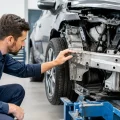
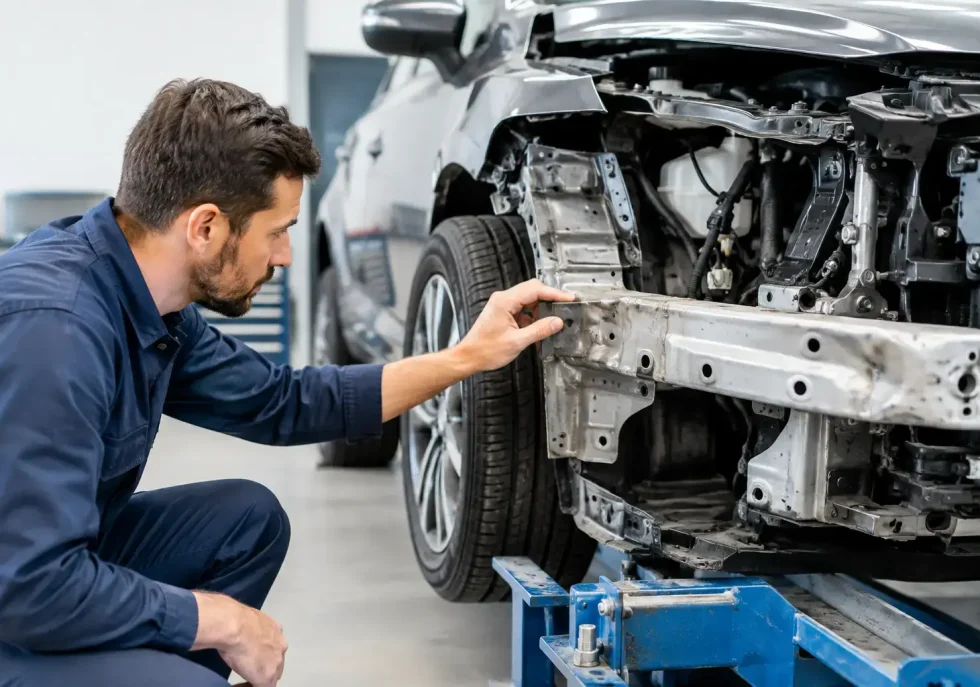
After an accident, visible damage tells only part of the story. A thorough assessment generally begins with a visual inspection, but it does not end there. Technicians look for uneven panel gaps, buckled metal, damaged seams, shifted suspension components, and signs that the impact traveled beyond the obvious point of contact.
Electronic or computerized measuring systems compare the vehicle’s actual dimensions with factory specifications. Measurements can reveal small shifts that are difficult to see, especially beneath exterior panels. A pre-repair scan may also identify diagnostic trouble codes related to airbags, sensors, cameras, or other electronic systems affected by the collision.
Disassembly is often necessary before a complete estimate can be written. Once damaged bumper covers, lamps, fenders, or interior trim are removed, additional damage may become visible. This is one reason repair plans can change after a vehicle enters the shop. It is not automatically a sign of poor estimating. It can be part of a responsible repair process.
What a proper frame repair process looks like
The right process varies by vehicle and damage type, but a sound structural repair follows a disciplined sequence. First, the vehicle is documented, inspected, and measured. The repair team then reviews manufacturer procedures and prepares an estimate that identifies repairable and replaceable components.
If straightening is approved, the vehicle is secured to specialized equipment. Controlled pulls are made while structural points are measured against factory dimensions. Damaged panels and mechanical components may be removed as needed to access the affected area and prevent them from masking the true condition of the structure.
When replacement is required, technicians use the approved joining methods for that vehicle. Depending on the material and location, this may involve welding, rivet bonding, adhesive bonding, or another manufacturer-specified method. The repaired area also needs appropriate corrosion protection before panels are reinstalled.
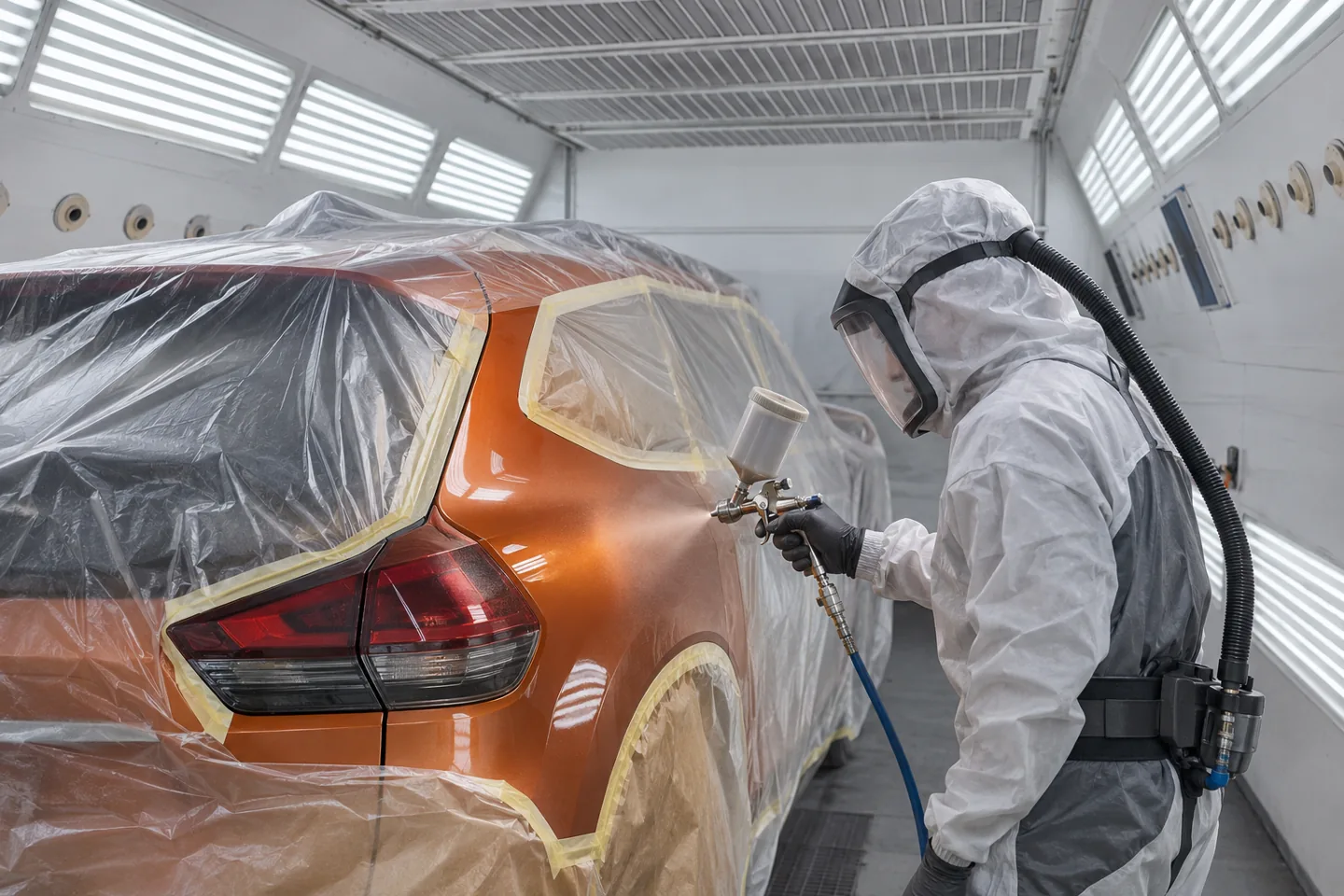
The final steps matter just as much as the structural work. A complete repair may include wheel alignment, mechanical inspection, diagnostic scanning, recalibration of driver-assistance features when required, panel fit checks, and refinishing. These steps help ensure the vehicle is safe, functional, and properly finished, not merely presentable.
Will frame damage total a car?
Frame damage does not automatically mean a vehicle is a total loss. Insurers generally compare the estimated repair cost with the vehicle’s actual cash value and may also consider state guidelines, expected supplemental damage, and salvage value.
A newer vehicle with repairable structural damage may be worth restoring, especially if the repair can be completed according to manufacturer standards. An older vehicle with lower market value may be declared a total loss even if the structure is technically repairable. That is a financial decision, while the repairability decision is a technical and safety question.
Do not assume a total loss based on the word frame alone, and do not assume a vehicle is safe based on a quick visual check. Accurate measurements and a complete inspection should guide the decision.
Signs you should schedule a professional inspection
If your vehicle was involved in a meaningful impact, it is wise to have it evaluated even if it still drives. Certain symptoms make a prompt inspection especially important:
- The vehicle pulls to one side, wanders, or has a steering wheel that is no longer centered.
- Doors, the hood, or the trunk do not open, close, or align as they did before the accident.
- You notice uneven tire wear, rubbing noises, or a wheel that appears out of position.
- There are wrinkles in the roof, floor, trunk area, or inner fenders.
- A collision involved curb impact, wheel impact, airbag deployment, or visible suspension damage.
These signs do not prove that the frame is damaged, but they can point to structural or suspension issues that should not be ignored.
Questions to ask before authorizing repairs
You do not need to be a collision expert to protect your vehicle. Ask whether the shop will perform structural measurements, follow manufacturer repair procedures, and provide an explanation of which parts will be repaired versus replaced. If your vehicle has cameras, radar, or other driver-assistance features, ask whether scanning and recalibration are needed after repairs.
It is also reasonable to ask how the shop handles supplemental damage discovered during disassembly and how it coordinates with your insurer. Clear communication matters when a repair affects safety, transportation, and the value of your vehicle.
At Auto Collision Specialists, the focus is on giving South Florida drivers a clear repair plan backed by experienced technicians, modern equipment, and careful coordination from estimate through final delivery. If an accident leaves you unsure about structural damage, getting accurate measurements early can replace uncertainty with a safer next step.